

Challenge
High wettability
Pick up articles






Table of contents
Solder wettability and “High-wettability”
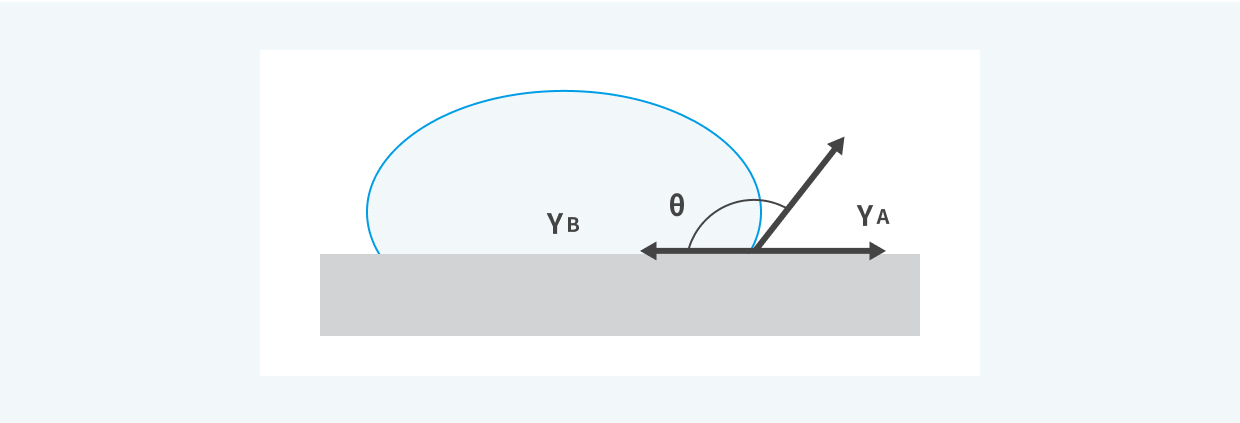
Wetting refers to the phenomena which molten solder spread to the soldering pads on the PCB or component electrodes. When liquid is placed on a solid, liquid takes certain shape depending on the characteristics of both liquid and solid.
The angle (θ) where liquid and solid contact, is called “contact angle” and regarded as index to determine degree of wetting = wettability.
It can be said that smaller the contact angle, higher the wettability.
Flux has many important functions to realize good wettability. Main functions include removing oxide layer from the metal surfaces (on soldering pads and component electrode) and prevent re-oxidation of the metal substrate and solder during main heating.
Issues associated with solder wetting
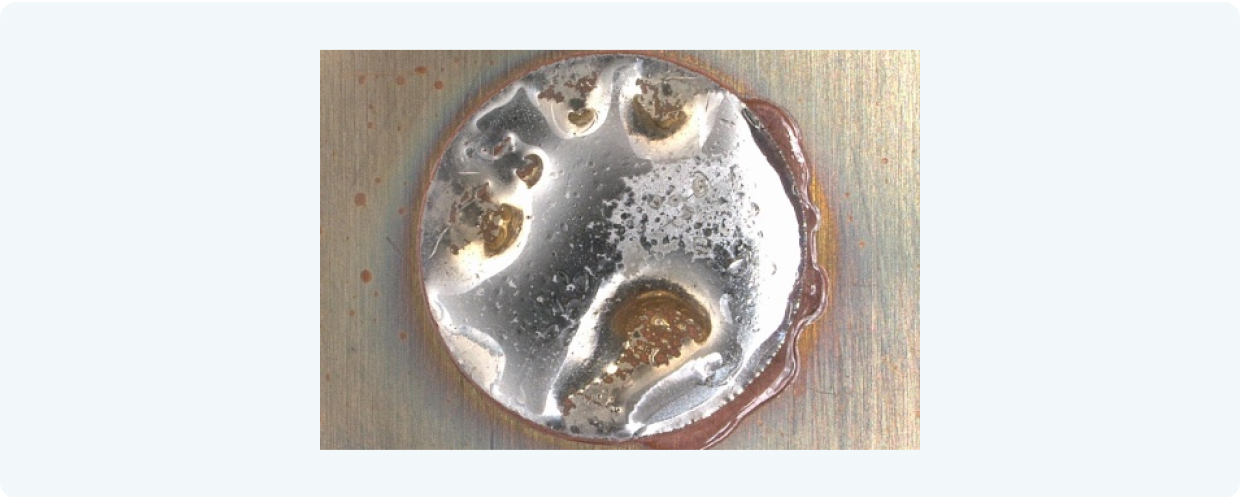
When oxide layer is formed on the PCB surface, it will be a huge obstacle when ensuring solder wettability.
In case of soldering on hard to wet substrates such as Ni or brass, surface oxide layer must be thoroughly removed. Insufficient oxide layer removal often induces poor wetting or de-wetting (repelled solder) issue.
Wettability improvement measures
Rosin and activator in the flux constitute solder paste and have significant impact on solder paste wetting. Wettability improvement is associated with flux performance such as speed, capacity and duration of oxide layer removal.
Excessive oxidation of the component electrode and PCB pads or using hard-to-wet substrate may result in poor wetting pefromance.
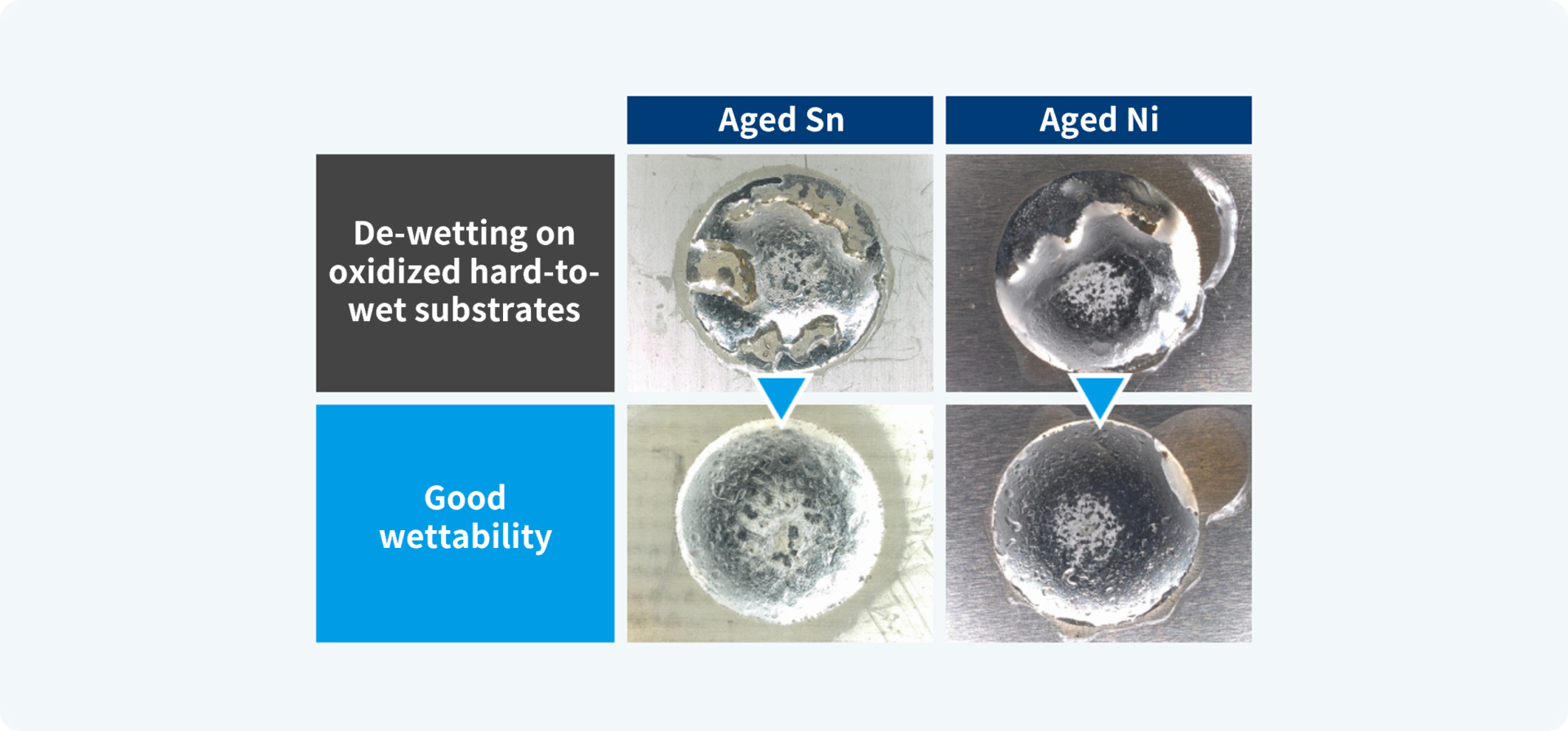
However, there are fluxes with high wettability that can perform strong oxide layer removal force on hard-to-wet substrates now. By using these fluxes, good wettability toward hard-to-wet substrates can be obtained.
■ Improving wettability toward aged substrate

Keywords / Related articles
Contact Us Inquiry
For any requests for estimates, product information, technical questions, etc. please reach out to us.