

Challenge
Low-Flux Splattering
Pick up articles










Table of contents
What is splattering?
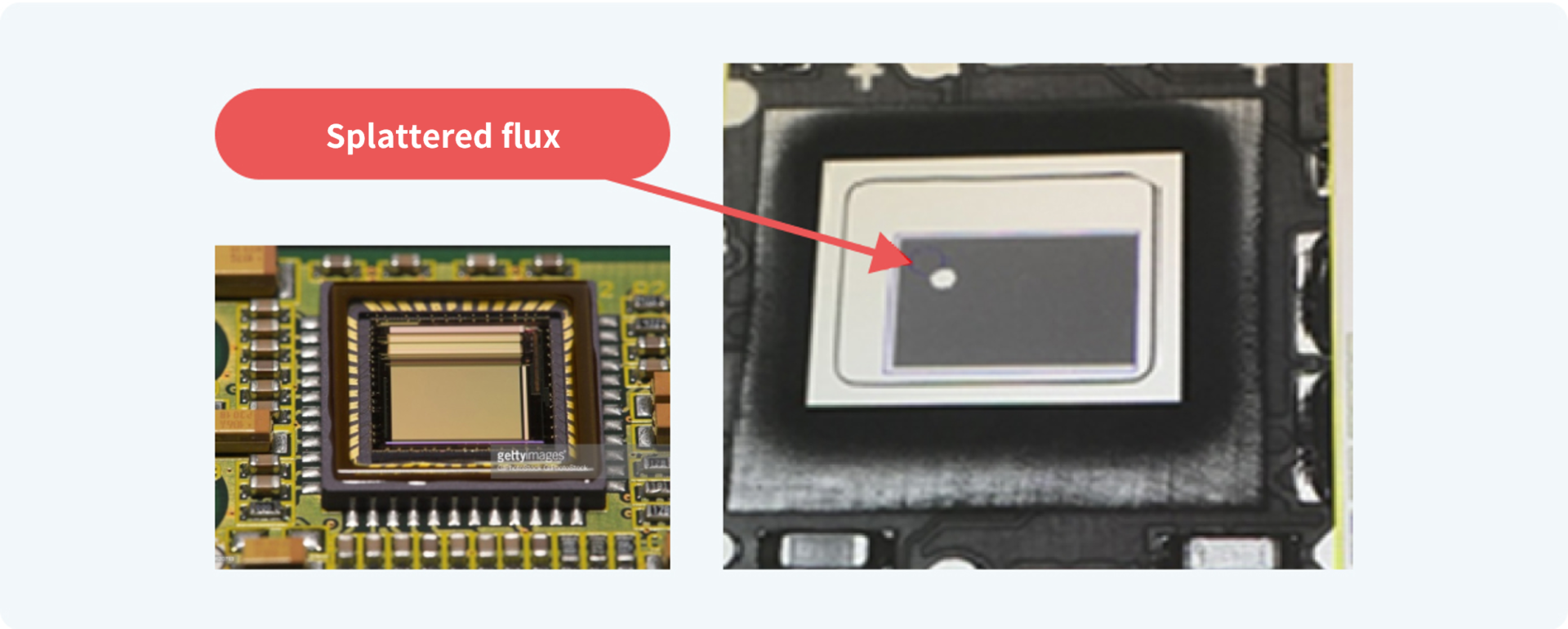
Splattering occurs when material is ejected out of the solder during reflow. Flux or solder could splatter and land on nearby components from the molten solder.
If the solder splatter lands on a contact point, such as a component connector, it could cause a contact error, and if it lands on a LED, lens or sensor component, it could cause insufficient brightness or false detection issues , etc.
Automobile modules (with cameras and sensors mounted) are increasing in number and functionality owing to advanced safety features. As a result of this as well as miniaturization trends, components are more densely populated on the board, which increases the chance of flux splattering causing function errors. Therefore, the flux splattering issue is an area of focus.
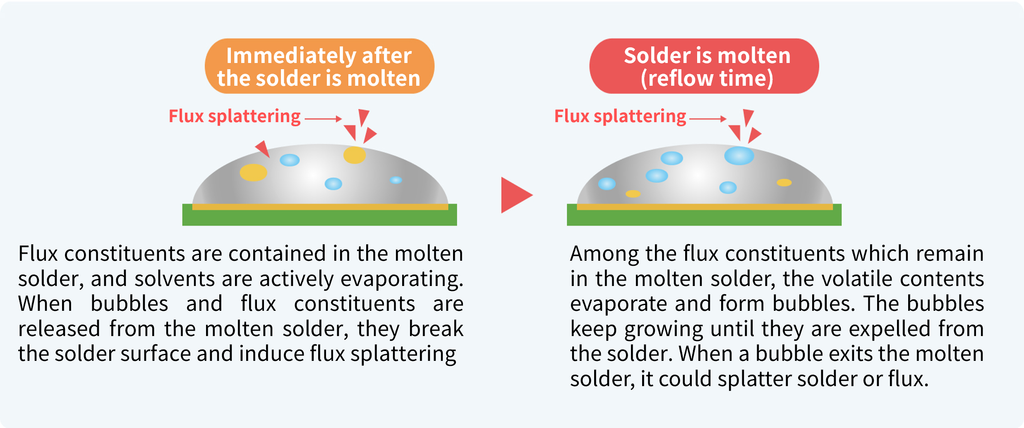
Mechanism of flux splattering occurrence
Major cause of flux splattering is:
- Residual solvent from preheat evaporates
- Flux is oxidized or reduction gas has been generated
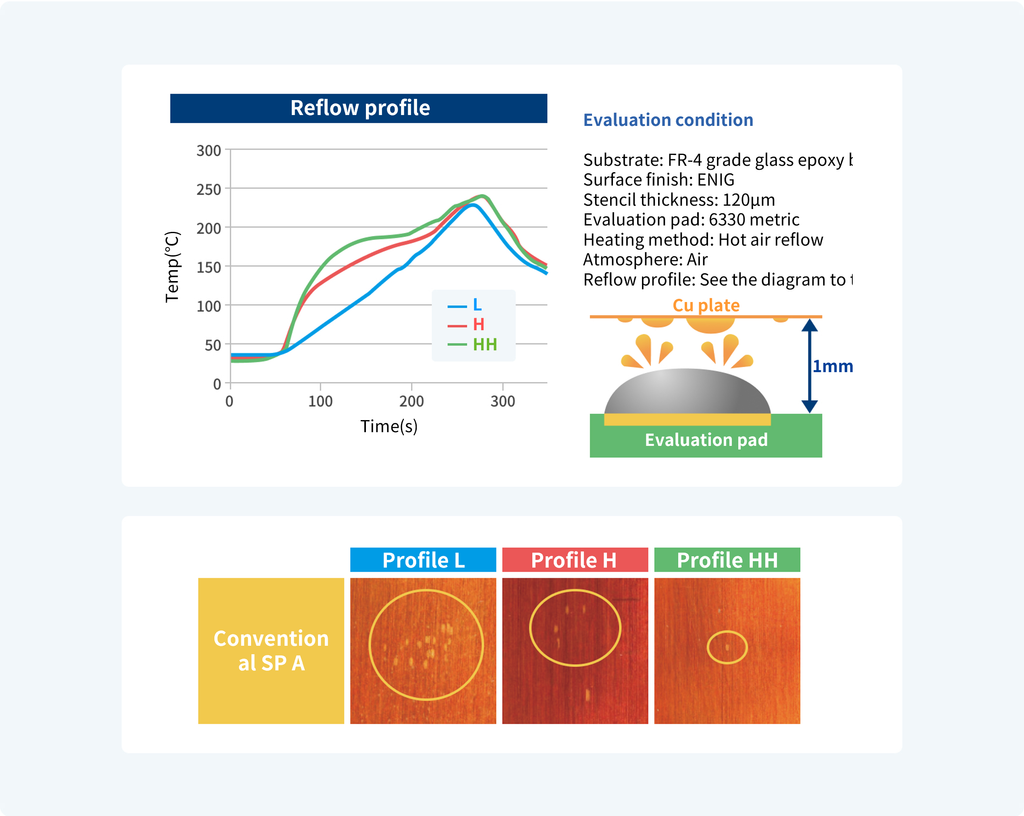
Countermeasures on reducing flux splattering
- Components, PCB or metal stencil
→Reduce the amount of solder paste on the soldering pad to reduce the amount of potential splatter
- Reflow profile
→Raise the preheat temperature and reduce the amount of volatile content in the solder paste before the solder reaches the melting point. Note this could deteriorate wetting performance due to accelerated oxidation
- Material (solder paste)
→Reduce the amount of volatile content which evaporates at low temperature
→Improve the flux fluidity
→Promote flux bubble release from the molten solder
→Use a solvent which evaporates at a relatively lower temperature
→Consider a soldering material with low flux splattering features
■ Splattering test

Keywords / Related articles

Contact Us Inquiry
For any requests for estimates, product information, technical questions, etc. please reach out to us.