

Requirement
Low Curing Temperature Adhesive
Pick up articles





Table of contents
What is low-temperature curing?
Most commonly used thermosetting adhesives cure at a medium temperature range of approximately 130°C to 150°C. On the other hand, some adhesives cure at 100°C or lower to accommodate the heat resistance of components, and these are referred to as low-temperature curing due to their cure temperatures.
Market demand for low-temperature curing adhesive
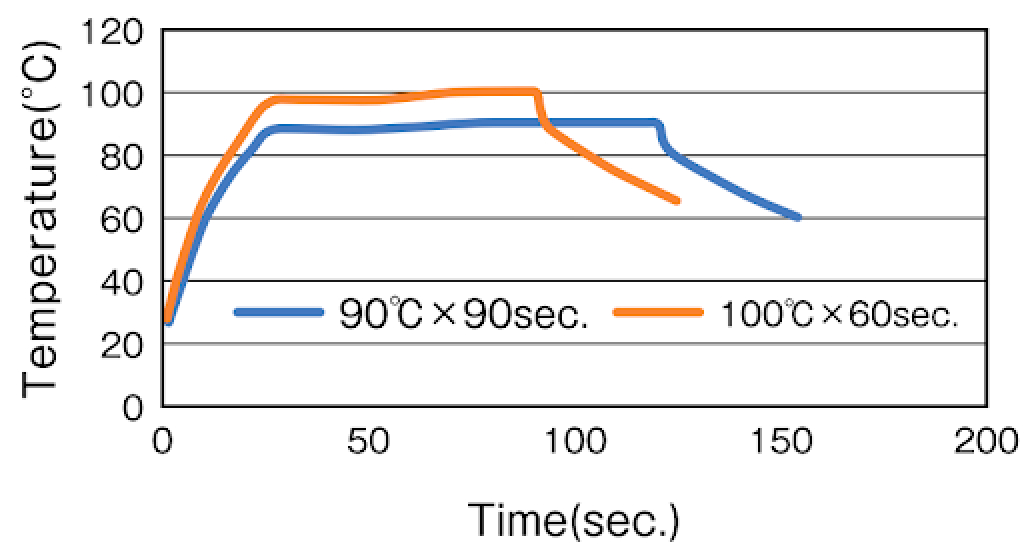
When temporarily fixing components on double-sided PCB soldering, components with high heat resistance are fixed on the PCB using SMT adhesive at the same time with reflow soldering. If the wave soldering is the main soldering process and the assembly is comprising from low-heat resistant components or paper phenol PCB, adhesive is also required to be low-temperature curing. KOKI’s low-temperature curing adhesive cures below 100˚C and can reduce thermal damage to the components.
■ Typical curing profile
Benefit of low-temperature curing adhesive
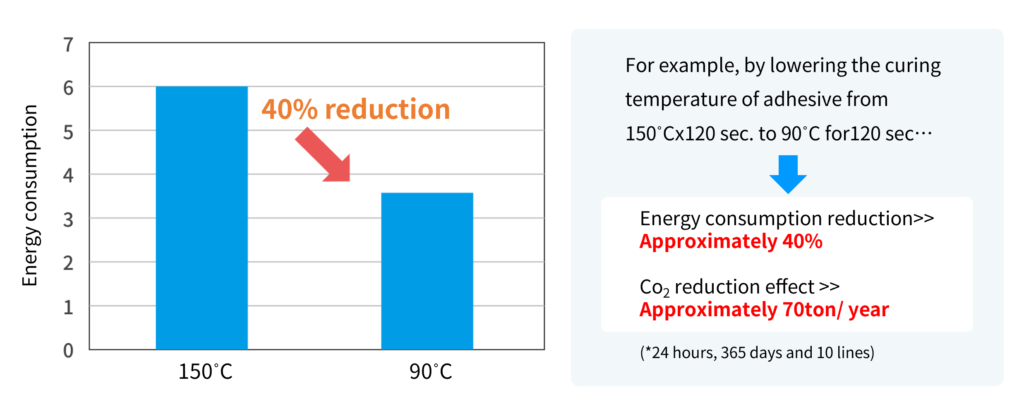
Lower Energy Costs and Reduced Carbon Footprint
By using low-temperature curing adhesive, components and PCBs with low temperature resistance (e.g. paper phenol board) can be used and cost reduction can be achieved. In addition, temperature setting of the reflow and wave soldering equipment can be lower, which contributes to reduce energy consumption and power bills, and contributes to CO2 reduction (carbon neutral).
■ Hourly energy consumption of curing oven
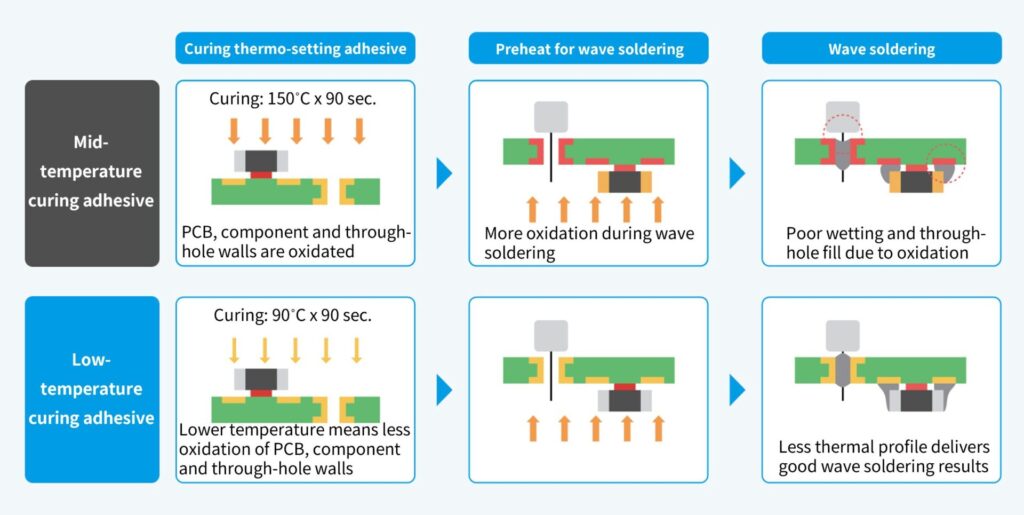
Preventing Component and PCB Oxidation
This process minimizes the heat load applied to components and PCBs prior to wave soldering, preventing soldering joint defects caused by oxidation and suppressing PCB thermal warpage.
■ Thermal profile image of the components and PCB


Keywords / Related articles

Contact Us Inquiry
For any requests for estimates, product information, technical questions, etc. please reach out to us.