

Requirement
Low Temperature Soldering
Pick up articles





Table of contents
What is low-melting point solder alloy?
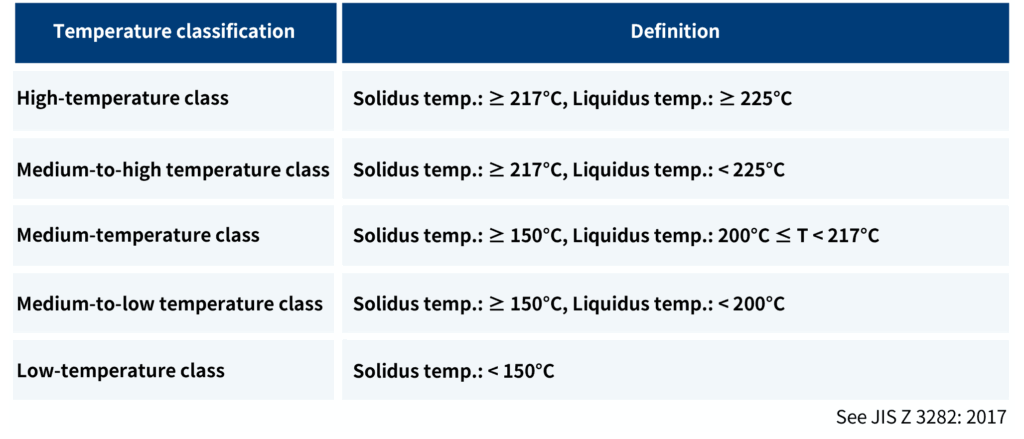
SAC305 (Sn3.0Ag0.5Cu) is the most prevalent lead-free solder alloy in general electronics assembly, featuring a melting point of 217–219°C. Today, the market is actively seeking low-melting-point solder alloys to operate at lower temperatures. In particular, Sn-Bi-based alloys are becoming the standard in the market.
・Sn/58Bi melting point: 138˚C
Reflow setting temperature can also be 40~50˚C lower than SAC305, therefore, it is a soldering material that can contribute to energy-saving and CO2 reduction (carbon neutral).
Market demand for low-melting point solder alloy
While SAC305 remains the industry standard for general soldering, the trend toward thinner, multi-layered PCBs and miniaturized, low-profile components has introduced new challenges. These include solder joint defects caused by PCB warpage, the need to solder onto low-heat-resistant substrates like PET, and the necessity of secondary assembly processes for heat-sensitive components. To address these challenges, low-melting-point solder alloys are gaining significant traction, as they effectively mitigate warpage, enable low-temperature soldering on sensitive substrates, and eliminate the need for additional selective soldering steps.
Actual cases of low-melting point alloy use
Soldering low-heat resistant materials
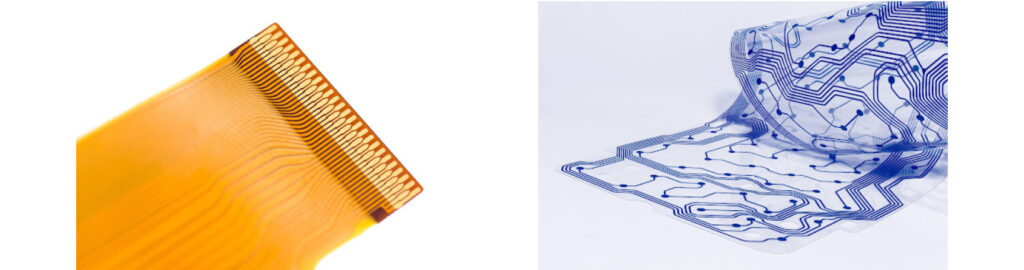
Low-melting point solder alloy is used if using SAC305 alloy (217~219℃) could exceed the heat resistance capacity of the components, such as ultraprecision components, plastic components, PET PCB, and other materials which has warpage concern during soldering, such as flexible printed circuits (FPC).
Soldering all additional components which needed a separate soldering process
Secondary soldering processes can be eliminated by reflowing heat-sensitive resin components (such as connectors) simultaneously with other SMT parts.
Cost reduction / Energy saving / CO₂ reduction
By using low-melting point solder, materials with low heat resistance (electric components and PCB, such as paper phenolic board) can be used to reduce the material cost. In addition, temperature setting of the soldering equipment, such as reflow oven or wave soldering machine can be reduced, saving energy consumption and cost, and reduce CO2 emission.


Keywords / Related articles

Contact Us Inquiry
For any requests for estimates, product information, technical questions, etc. please reach out to us.